 简体中文
简体中文

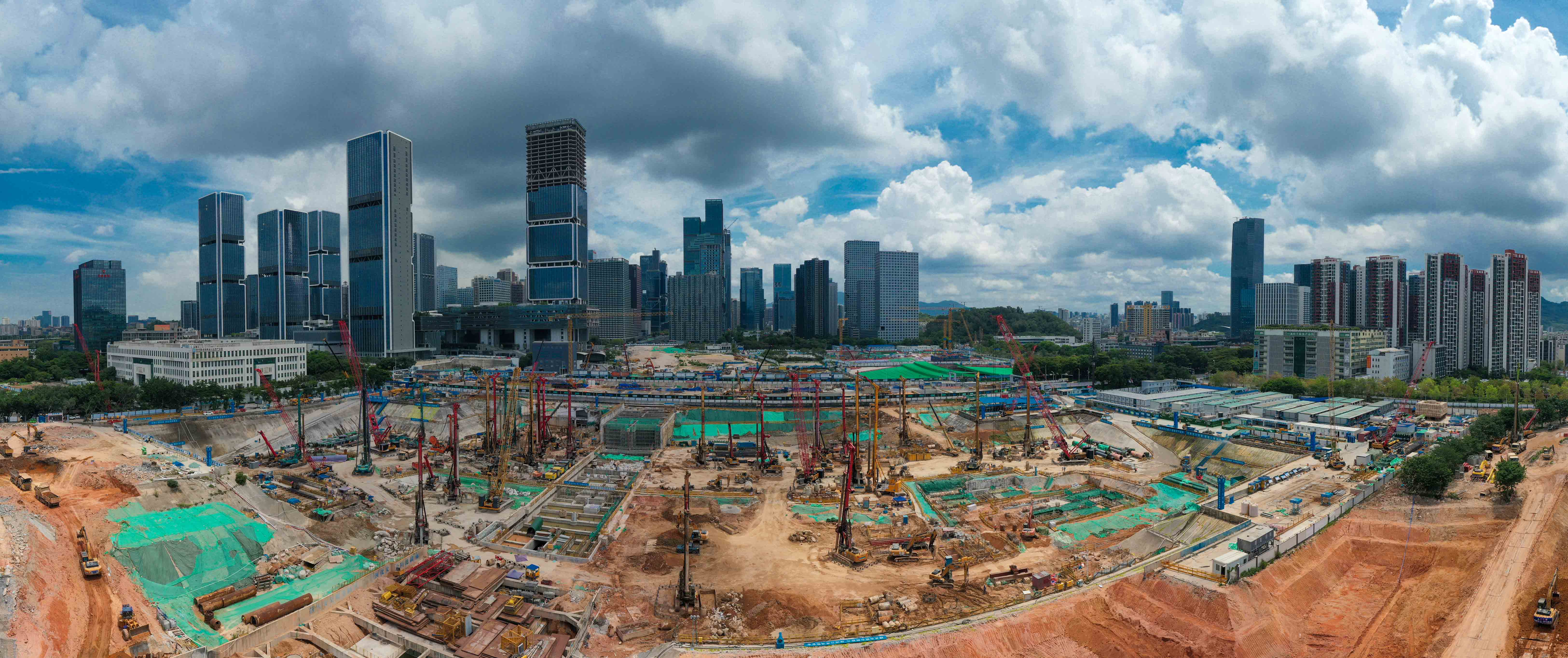
As a core node in the rail transit network of the Guangdong-Hong Kong-Macao Greater Bay Area, the construction of Shenzhen Xili Comprehensive Transportation Hub undertakes the major mission of improving the regional transportation pattern and strengthening Shenzhen's core engine function. This super project, whose planned scale surpasses Shenzhen North Railway Station and will become the largest rail transit transfer hub in China, has been facing multiple construction challenges since the start of construction at the end of 2023. The total investment of the project reaches 37.085 billion yuan. With Xiashen Railway Guangdong Co., Ltd. as the construction unit, the consortiums such as China Construction South and China Construction Second Engineering Bureau, as well as many powerful enterprises including China Railway 11th Bureau Group, China Railway 12th Bureau Group, and China Railway 7th Bureau Group, respectively undertake the general construction tasks of different sections, writing a chapter of infrastructure construction overcoming difficulties in the complex construction environment.
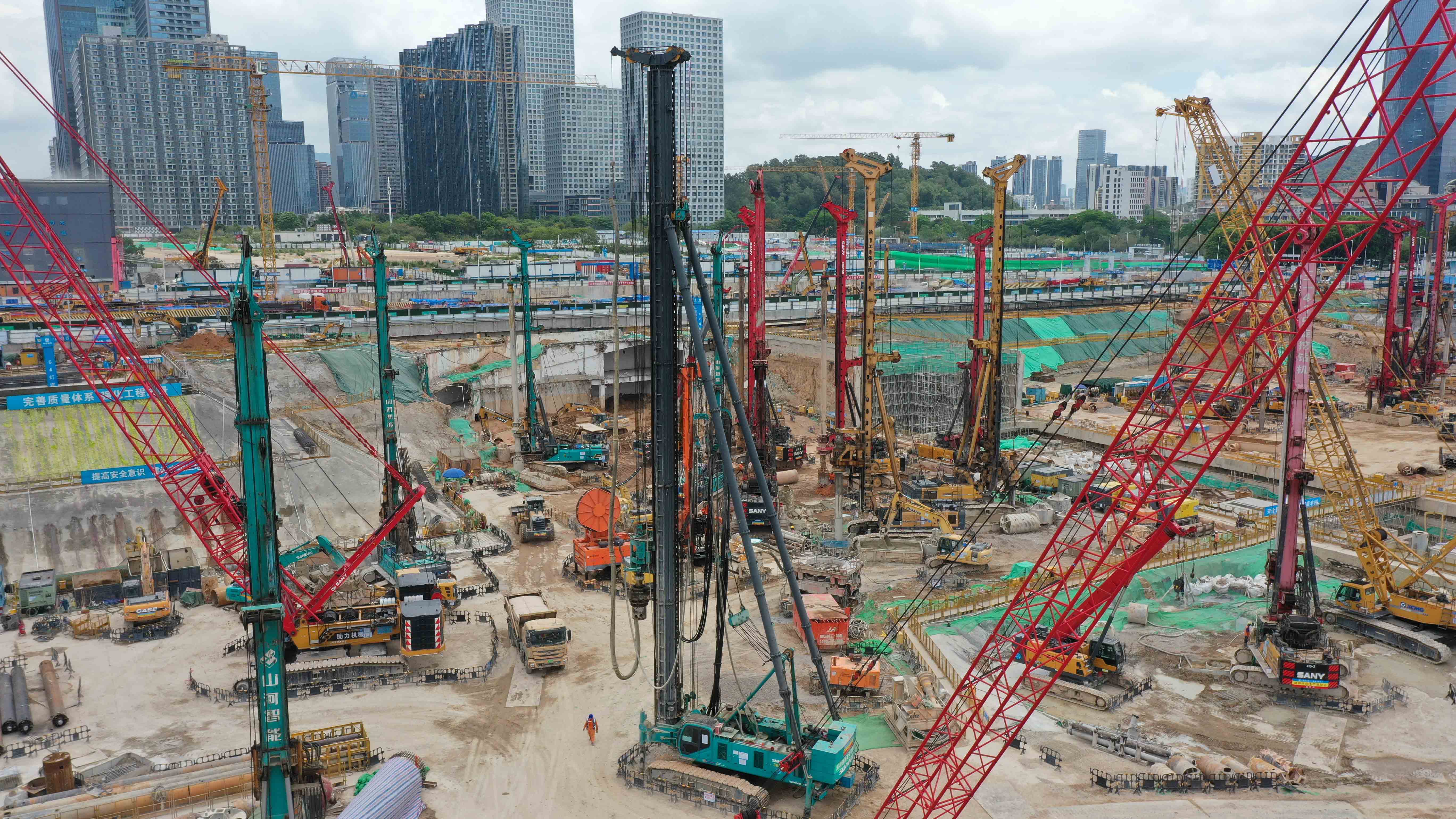
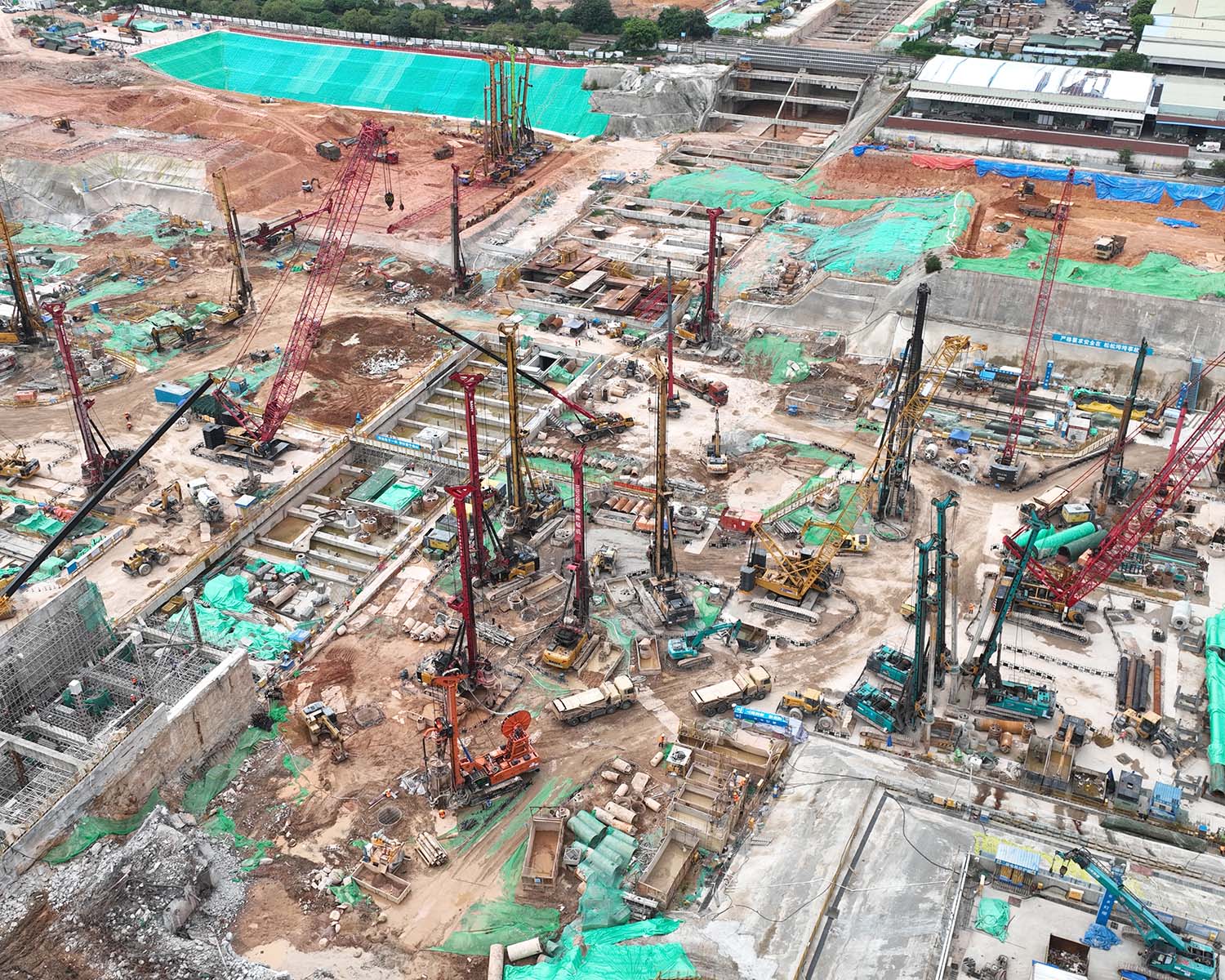
The construction difficulty of Xili Transportation Hub is first reflected in the foundation engineering challenges brought by the complex geological and surrounding environment. The project is located in the north-central part of Nanshan District, Shenzhen, surrounded by multiple major traffic arteries such as Chagguang Road and Nanping Expressway. It is adjacent to Liuxiandong Strategic Emerging Industry Headquarters Base in the north and North District of Nanshan Science and Technology Park in the south. The surrounding underground pipe network is dense, and it is also close to Nanping Expressway and Nanguang Expressway ramp bridges. The construction site has extremely strong space constraints and strict safety control requirements. More importantly, the regional geological conditions are complex, and the foundation pit project has become the first "stumbling block" — the total area of the project's foundation pit is about 60,000 square meters, and there are more than 2,500 engineering piles and retaining piles alone in the north square area, with a maximum pile depth of 58 meters. At the same time, multiple construction technologies such as top-down construction and cut-and-cover construction need to be adopted simultaneously, and the pile foundation construction alone took nearly a year to complete in an all-round way. Especially the foundation pit in the west throat area, which is overall "trumpet-shaped", wide in the east and narrow in the west, with an excavation area of about 44,000 square meters and a perimeter of more than 1,200 meters, adjacent to major traffic arteries. During the excavation process, it is necessary to prevent foundation pit deformation and ensure the normal traffic of surrounding traffic, resulting in high safety risks and great organizational coordination difficulties.
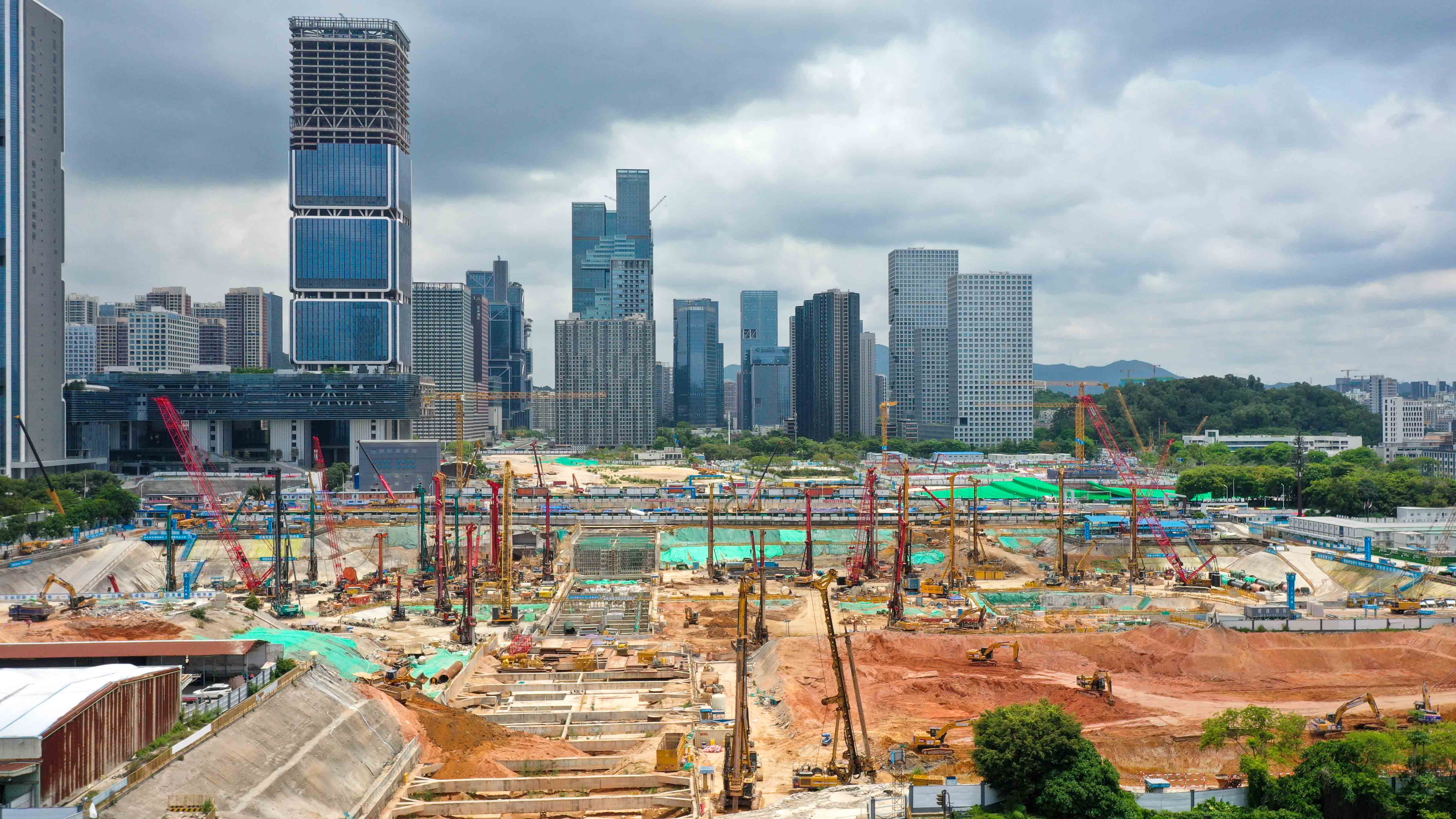
The "four multiplicities" characteristic of the engineering design further intensifies the complexity of the construction. As a super hub integrating national railways, intercity rail transit and urban subways, Xili Transportation Hub is planned to form a multi-level rail transit network of "4 high-speed railways + 2 intercity railways + 4 subways", with a total scale of 13 platforms and 25 lines and a total construction area of about 914,400 square meters, equivalent to the size of 20 football fields. The project itself presents significant characteristics of multiple functional formats, multiple construction interfaces, multiple structural forms and multiple spatial layers. Different types of traffic lines are criss-crossed and arranged at multiple levels of underground, ground and above ground. The underground structure alone involves multiple functional areas such as multi-layer transfer channels, equipment rooms and platform layers, and the connection interfaces of various professional constructions reach hundreds. Taking pipeline layout as an example, the power supply, communication, water supply and drainage pipelines of high-speed railways, intercity railways and subways have different specifications and complex directions. It is necessary to accurately avoid structural beams and columns, and also ensure the maintenance space for subsequent operations, putting forward extreme requirements for the refinement of construction. To this end, the construction team introduced BIM (Building Information Modeling) technology to build a 3D collaborative platform, realizing visual design and construction simulation of comprehensive pipeline layout, and minimizing the risk of interface conflicts.
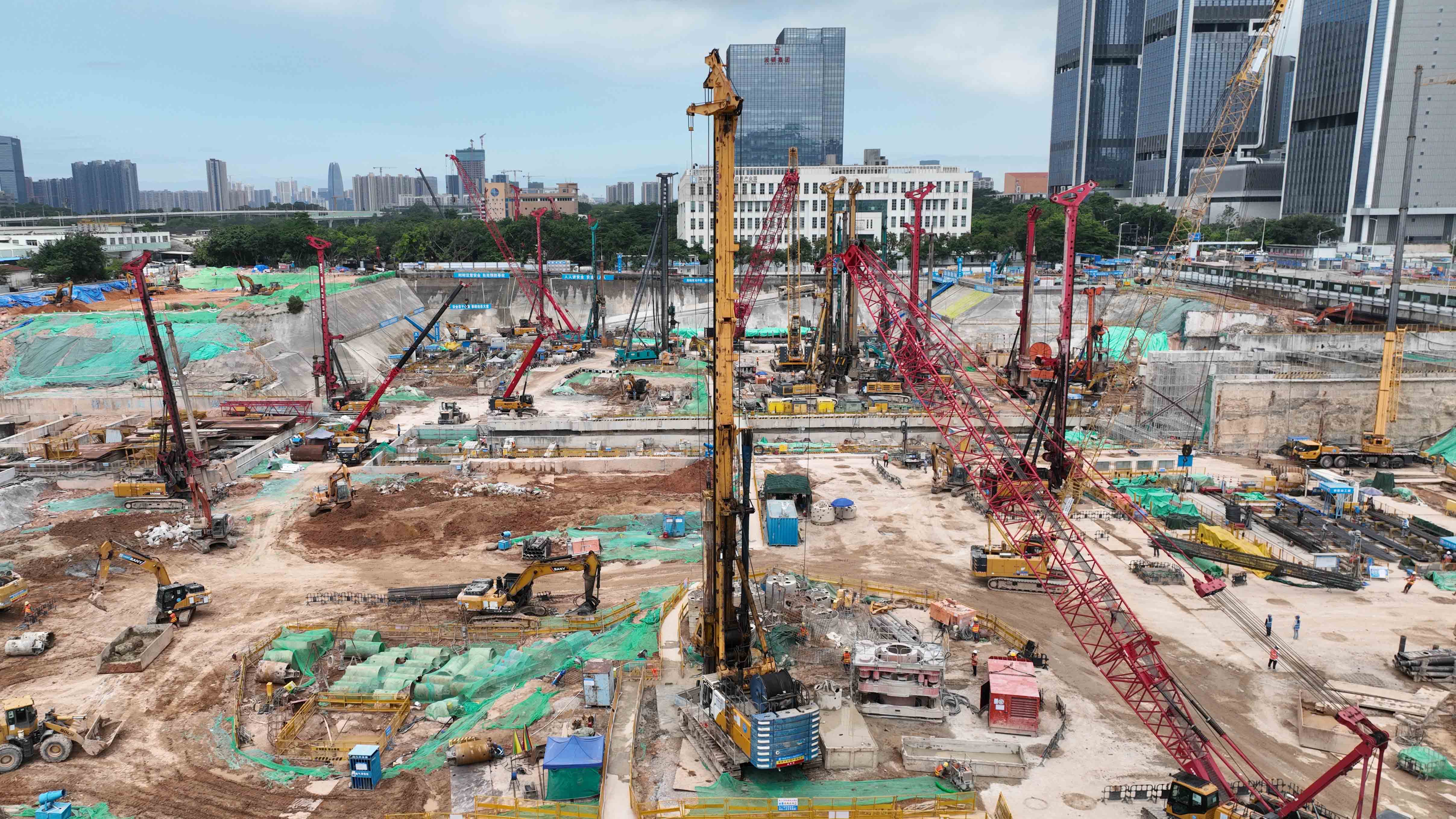
Ultra-high precision construction standards and large-scale construction organization constitute another major challenge for the project construction. To ensure the safety and stability of the hub's operation, the project puts forward millimeter-level requirements for the precision control of structural construction. In the construction of steel pipe columns, the construction team adopted the pre-insertion hydraulic verticality adjustment technology, combined with the real-time monitoring and automatic deviation correction technology of dual inclinometers, realizing precise control of 3D positioning error ≤ ±15mm and verticality 1/1000, ensuring that all engineering piles meet the Class I pile standard. At the same time, the project construction is of extremely high scale. During the peak period, 120 sets of construction machinery and more than 2,000 operators need to be invested, with a daily earthwork disposal capacity of 20,000 cubic meters. Only the earthwork excavation of the north square needs to complete a huge amount of work. While ensuring the construction progress, it is necessary to strictly control the environmental impact such as dust and noise, and practice the concept of green construction. In addition, part of the project's construction area is located in the operation security zone of Shenzhen Metro Line 13, which is about to enter the operation state. During the construction process, it is necessary not only to strictly control the impact of blasting vibration and earthwork excavation on the existing line structure, but also to ensure the safety of the operation line, further compressing the fault-tolerant space of the construction.
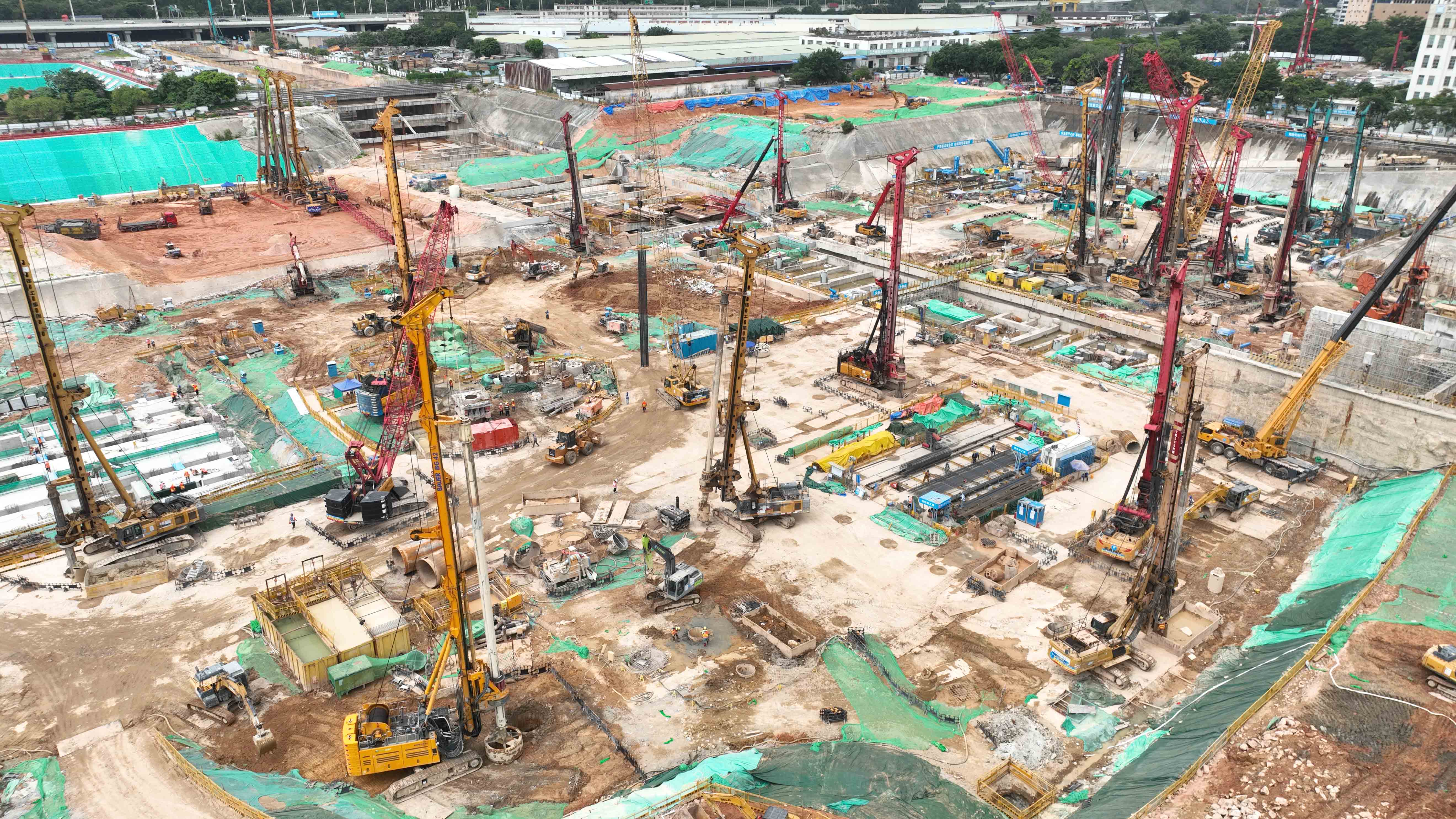
Faced with numerous challenges, various general contractors have set up professional innovation teams to solve problems through technological breakthroughs and management innovation. The consortium of China Construction South and China Construction Second Engineering Bureau built an intelligent construction site management system in the Section I project, using face recognition access control and UAV inspection to realize all-weather digital management and control of personnel, equipment and the environment; China Railway 7th Bureau Group organized multiple special seminars to optimize the construction plan before the construction of the foundation pit in the west throat area, ensuring the orderly progress of the construction through forward-looking planning; units such as China Railway 11th Bureau Group and China Railway 12th Bureau Group have strictly implemented the quality control system in their respective sections to ensure the steady progress of the project construction. As of October 2025, the project has completed all pile foundation construction, fully entered the main structure construction stage, and the cumulative completion of earthwork excavation in the north square has reached 72.15%, steadily moving towards the completion goal in August 2028.
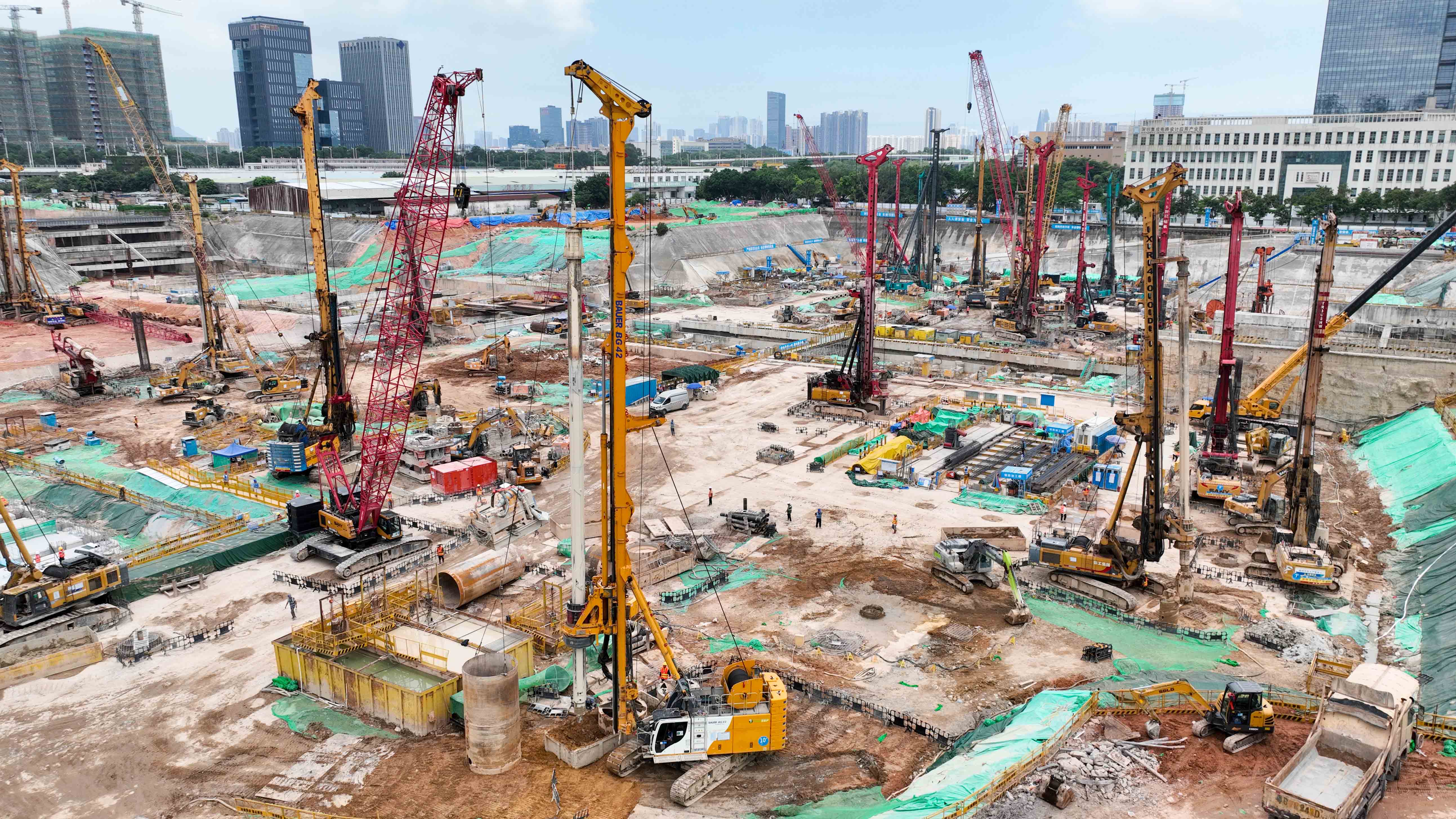
From the huge investment of 37.085 billion yuan to the collaborative tackling of multiple central enterprise consortia, from the breakthrough of complex geology to the control of millimeter-level precision, the construction process of Xili Transportation Hub is not only a challenge to the limit of infrastructure technology, but also a concentrated display of China's infrastructure strength. With the gradual solution of various construction challenges, this super hub is turning from a blueprint into reality. In the future, it will connect the core cities of the Greater Bay Area with a "one-hour living circle", injecting strong momentum into the high-quality development of the region.